Tesla Slips Optimus Delivery Target to Late 2027 Amid Hardware Struggles
The company cites unresolved issues with robot hands and AI architecture as reasons for the delay in shipping its humanoid units to external clients.
By Fatima Zayed ·
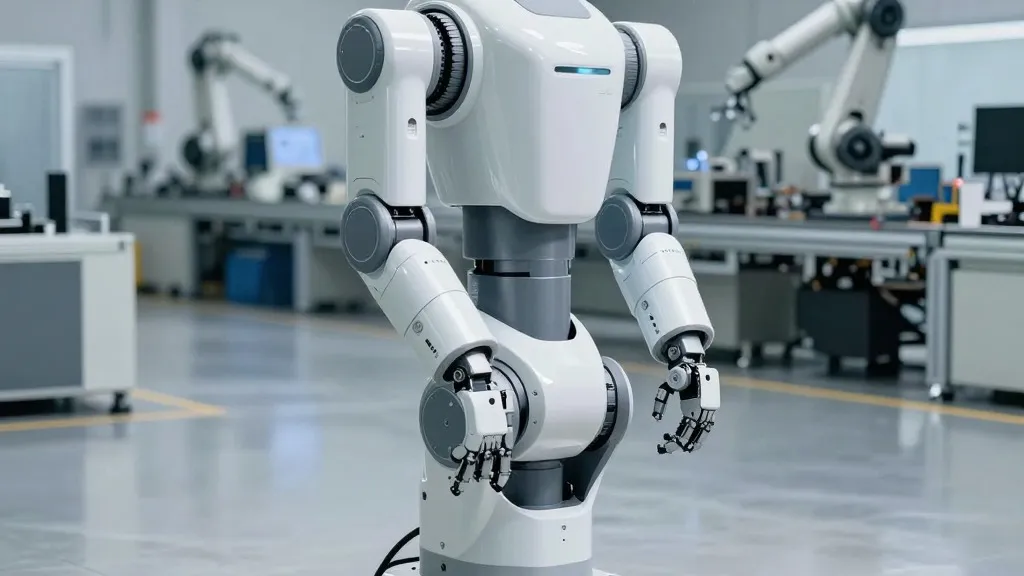
Tesla has officially pushed the timeline for delivering its Optimus humanoid robots to outside customers to late 2027. During the company’s third quarter 2026 earnings call, CEO Elon Musk indicated that the robots still require significant development in three critical areas: hand mechanics, overall durability, and artificial intelligence capabilities. This update marks another shift in the schedule for the highly anticipated machine, which was previously expected to be in wider circulation sooner.
The company has initiated early production of the Optimus on a high-volume line at its Fremont facility, a site formerly dedicated to Model S and Model X manufacturing. While the majority of the assembly line, designed for a theoretical annual capacity of one million units, is already installed, Musk stated that reaching a production rate of 20,000 units per week will take at least a year, and possibly longer. He explained that parts of the design are still undergoing changes, preventing the line from operating at full speed immediately.
Specific hardware challenges remain the primary bottleneck. When questioned by an analyst about where the design is still fluctuating, a Tesla engineer identified the hand as one of the most difficult components to finalize. The robot’s fingers must be soft enough to handle delicate objects while withstanding constant wear and tear, a challenge compounded by the fact that robots cannot heal like human skin. Custom gears also present reliability concerns. Musk agreed that the hand is the main issue, noting that the electromechanical design and general reliability must be solved before external deliveries can begin.
On the software side, Tesla is still working through issues with its AI architecture. Unlike its fleet of cars, which continuously collects data for its Full Self-Driving program, Tesla does not have a large fleet of robots gathering real-world data. To address this, the company plans to build 10,000 to 20,000 robots to practice tasks in a facility dubbed the Optimus Academy. Additionally, Tesla intends to integrate its AI5 chip into the Optimus platform around April 2027. Musk promised a video within the next one to two months demonstrating the robot performing tasks that are not pre-programmed, arguing that many current industry demos rely on scripted routines that may not hold up in practical applications.
This timeline follows a pattern of delays. In 2024, Musk suggested the robot would be used internally in 2025 and sold in high volume in 2026. By January 2025, he predicted about 10,000 units would be built that year, with several thousand performing useful work by the end of the year. He later admitted that none had reached that status. The company’s recent shareholder letter describes the current batch from the Fremont line as the first production-quality bots, implying that all previous units were not of production standard.
Musk asserted on the earnings call that, to the best of his knowledge, no other company is even close to Tesla in developing a general-purpose humanoid robot. However, competitors are making visible progress. XPeng activated an automated production line for its IRON robot in Guangzhou in September, with over 80% of core processes automated. XPeng aims for mass production by the end of 2026 and deliveries in the first half of 2027, starting with retail environments. Boston Dynamics began producing its electric Atlas robot in January and has committed all its 2026 deployments, including to Google DeepMind and Hyundai, which plans to use 25,000 robots across its plants. Boston Dynamics hired Milan Kovac, Tesla’s former head of Optimus, in January, and has adopted a pragmatic approach by using sturdy grippers rather than complex dexterous hands for industrial tasks.
The delay highlights the broader challenges facing the humanoid robot industry, including the difficulty of creating hands that survive real work and AI systems that can generalize to new tasks. While Tesla may have built the most robots, making them useful and reliable remains the central hurdle for all players in the market.
Tesla will provide a video demonstration of the Optimus performing unscripted tasks within the next one to two months. The company expects to solve the identified AI and hardware issues by the end of next year, at which point it plans to begin delivering the robots to external industrial clients.
Source: Electrek